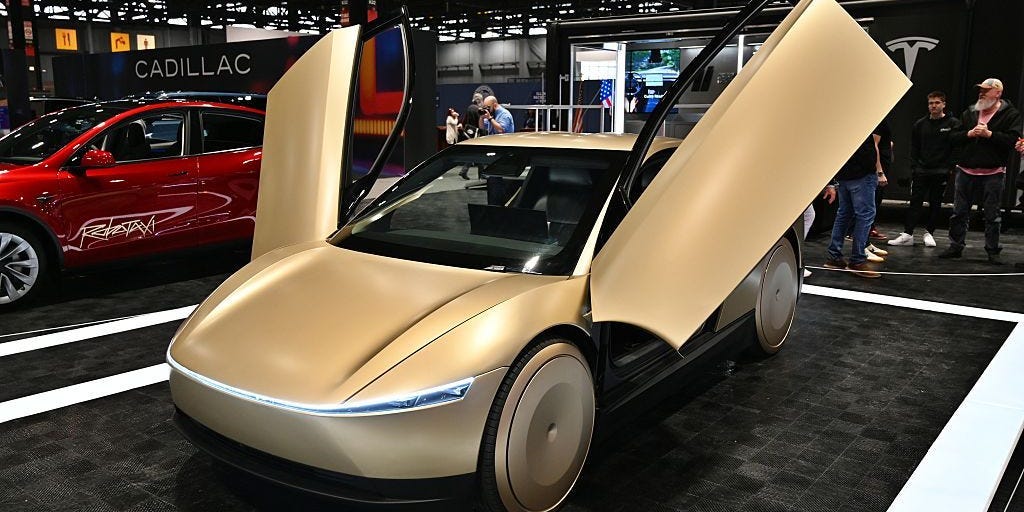
Tesla Robotaxi: Analysts Question Value Amid Model 2 Debate
Tesla’s recent limited launch of its robotaxi service in Austin has ignited a fresh wave of excitement and skepticism, particularly among financial analysts. While the vision of fully autonomous vehicles generating income for owners has long been a cornerstone of Elon Musk’s narrative for Tesla’s future valuation, industry observers are now questioning whether the highly anticipated robotaxi is a necessary short-term focus, especially amidst the ongoing debate around the company's much-needed affordable Model 2. The critical question swirling around Wall Street isn't just about the technology, but about the tangible tesla robotaxi numbers that could translate into significant revenue, and how these compare to the immediate market demand for a sub-$30,000 electric vehicle.
The Austin Debut: A Glimpse into Tesla's Autonomous Future, Sans Robust Numbers
On a Sunday in Austin, Texas, Tesla took a significant step, albeit a cautious one, towards realizing its autonomous ambitions. A select group of invited users experienced the company's first robotaxi rides, livestreaming their initial journeys. Priced at a flat fee of $4.20, these initial trips offered a tangible, if limited, demonstration of the technology. Notably, despite the promise of full autonomy, Tesla employees were present in the passenger seats for safety, underscoring the developmental stage of the service. This cautious rollout highlights a crucial point for investors: while the launch marks progress, the current tesla robotaxi numbers in terms of deployed fleet size, operational hours, and revenue generation remain exceptionally small. This limited scale means that for now, the robotaxi's impact on Tesla's financial statements is negligible, prompting analysts to look beyond the hype towards more concrete, near-term growth drivers.
The Austin launch, while symbolic, represents the beginning of a long journey. It's a testament to Tesla's innovation, yet it also serves as a stark reminder that true, widespread autonomous mobility is still a distant goal. As for the immediate future, market watchers are keen to see if and when these experimental rides will scale into a commercially viable service that can meaningfully contribute to Tesla's bottom line. The lack of substantial operational tesla robotaxi numbers from this initial phase reinforces the view that it's a long-term play, not an immediate catalyst.
Analyst Skepticism: Why Robotaxi Isn't a Short-Term Fix
The excitement surrounding the robotaxi unveiling, slated for August 8, has been tempered by a chorus of analytical caution. Prominent firms like Wedbush Securities have voiced concerns that while an autonomous future is enticing, it shouldn't overshadow more immediate priorities. Wedbush analysts explicitly stated that if the robotaxi is viewed as the "magic model" to replace the crucial Model 2, it would be a "debacle negative" for the Tesla story. Their assessment is clear: full autonomy, which is critical for a truly revenue-generating robotaxi fleet, isn't expected until around 2030.
This long timeline clashes directly with an urgent market need. The analysts emphasized that it is "crucial" for Tesla to deliver a sub-$30,000 electric vehicle within the next 18 months. This imperative gained further traction after a Reuters report on April 5 suggested that Tesla was halting development of its $25,000 Model 2 to reallocate resources towards self-driving cars. Elon Musk quickly countered this narrative on X, announcing the August 8 robotaxi reveal. However, for many, the core concern remains: is Tesla prioritizing a long-term, high-risk bet over a guaranteed high-volume segment?
The financial implications are profound. Musk has famously argued that new cars quickly lose value and that the real money is made from monetizing existing fleets through autonomous services. He once stated that it’s the "difference between Tesla being worth a lot of money or worth basically zero." However, this hinges on the widespread deployment of fully autonomous vehicles capable of generating income. Until then, the company's valuation remains heavily tied to traditional vehicle sales. The speculative value of future tesla robotaxi numbers, in terms of profitable rides, is still far from being realized, making the Model 2's high-volume potential a more tangible and immediate asset.
The Promise of Autonomy vs. Market Reality: Level 2 FSD and Safety Concerns
Musk has consistently championed Tesla's Full Self-Driving (FSD) software as the key to unlocking immense value. His vision includes owners generating money by having their vehicles provide fully autonomous rides when not in personal use. However, the current reality paints a different picture. Tesla's FSD beta is classified as "Level Two" in the industry standard, meaning it requires full human supervision at all times. This classification is a significant hurdle on the path to true robotaxi operations, where no human intervention is needed.
The journey to Level 5 autonomy, where a vehicle can operate completely independently under all conditions, is fraught with complex technical, regulatory, and ethical challenges. Numerous crashes involving Teslas operating on FSD have led to intense scrutiny from safety regulators and a growing number of lawsuits, highlighting the very real limitations and risks of the current technology. These incidents underscore the immense gap between today's FSD capabilities and the robust, safe, and scalable autonomy required for a successful robotaxi fleet.
The Austin launch, while exciting, included employee supervision precisely because the technology isn't yet ready for unsupervised commercial operation. This means that any substantial tesla robotaxi numbers related to profit generation or widespread public availability are years away. The transition from a supervised beta to a fully autonomous, commercially viable service requires exponential advancements and rigorous validation. For a deeper dive into the launch specifics, including fees and safety protocols, you can read our related article: Tesla Robotaxi Launch in Austin: First Users, Fees, and Safety. Furthermore, understanding the ambitious 2030 goal for full autonomy and its implications can be found in: Tesla Robotaxi Autonomy: 2030 Goal & August 8 Reveal Impact.
The Model 2 Imperative: Why Affordability Matters More Now
For years, Elon Musk himself has acknowledged the critical importance of a cheaper Tesla model to expand market reach and accelerate the world's transition to sustainable energy. A high-volume, affordable electric vehicle, often dubbed the "Model 2," is not merely a desirable addition; it's seen by many as an essential component of Tesla's future growth strategy. The global EV market is rapidly evolving, with increasing competition from traditional automakers and particularly aggressive expansion from Chinese manufacturers offering compelling, budget-friendly options. The market for premium EVs, where Tesla currently dominates, is becoming saturated, making the entry-level segment a fertile ground for exponential growth.
Without a mass-market offering, Tesla risks losing significant market share to competitors who are already delivering on affordability. The company's immediate profitability and growth trajectory are intrinsically linked to its ability to sell more cars to a broader audience. While the long-term vision of robotaxis is grand, the absence of significant tesla robotaxi numbers generating revenue means that traditional vehicle sales remain the primary engine of Tesla's financial performance. Diverting resources from the Model 2 development to focus solely on robotaxis, which have a much longer maturation period and higher inherent risks, could be a misstep that sacrifices immediate, tangible growth for a distant, speculative payoff.
Practical Insight for Investors: When evaluating Tesla, it's crucial to differentiate between aspirational long-term goals and concrete short-to-medium-term revenue drivers. While robotaxis offer exciting potential, their financial impact remains highly speculative for the foreseeable future. The Model 2, on the other hand, represents a direct path to increased market share, manufacturing scale, and predictable revenue growth in a rapidly expanding segment.
Conclusion
Tesla stands at a pivotal juncture, navigating the tension between its audacious long-term vision for autonomous robotaxis and the immediate market demand for an affordable, high-volume electric vehicle. While the Austin robotaxi launch represents an exciting, albeit limited, step towards autonomy, analysts are right to question its immediate value proposition. The reality is that the definitive tesla robotaxi numbers — referring to the scale of deployment, revenue generated, and profitability — are still far from making a significant impact on the company's financial health. Until true Level 5 autonomy is achieved and regulatory frameworks are fully established, the robotaxi remains a long-term gamble. In the interim, delivering on the promise of an accessible Model 2 appears to be the more pragmatic and strategically vital path for Tesla to sustain its growth, combat intensifying competition, and secure its market leadership in the evolving electric vehicle landscape.