Tesla Robotaxi Launches in Austin: A Glimpse into the Autonomous Future
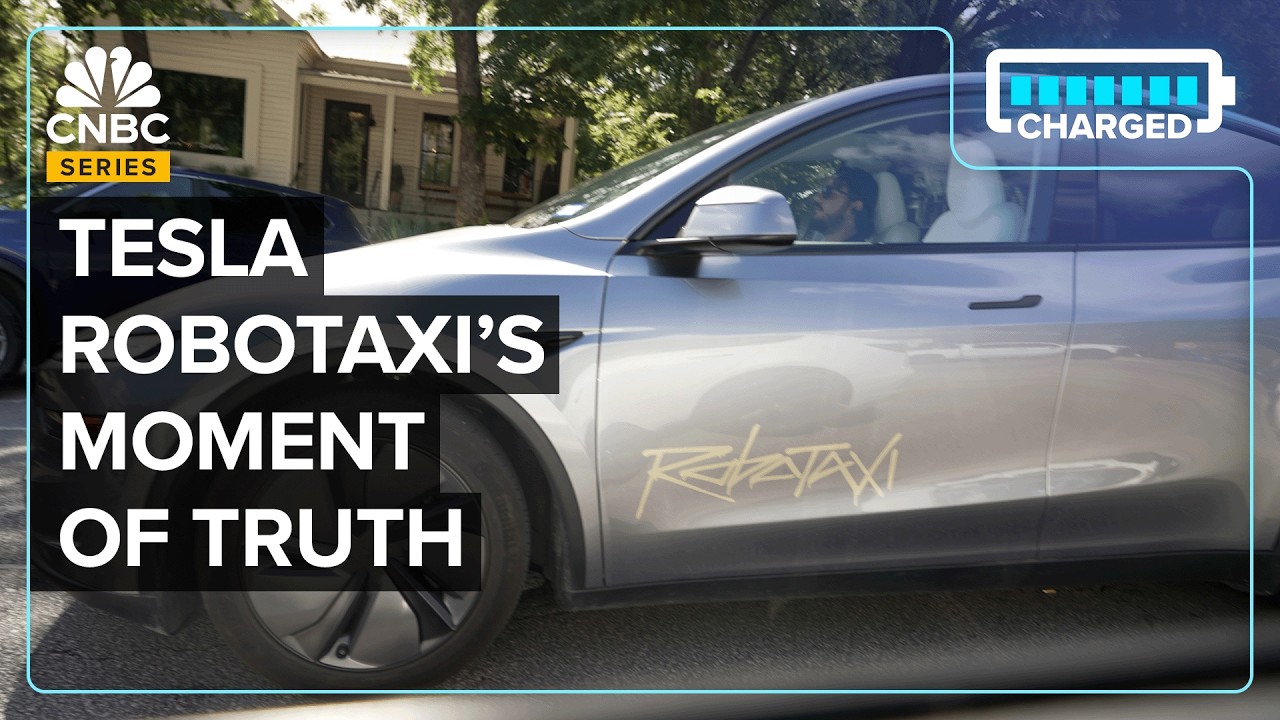
The highly anticipated Tesla Robotaxi has officially rolled out its first limited public rides in Austin, Texas, marking a significant, albeit cautious, step in the journey towards fully autonomous transportation. On a recent Sunday, after a brief delay that only amplified the anticipation, a select group of invited users became the inaugural passengers, livestreaming their experiences and offering the world its first real look at Tesla's vision for self-driving services. While the buzz is undeniable, this initial deployment reveals a complex landscape of technological aspirations, practical safety measures, and pointed industry scrutiny.
The Austin Debut: First Impressions and Limited Access
Austin was chosen as the proving ground for this initial foray into robotaxi services. The launch was characterized by its exclusivity, with only a small, pre-selected group gaining access. This controlled environment allowed Tesla to gather real-world data and feedback while managing expectations for a technology that is still very much in its developmental stages. The livestreamed experiences provided a unique, unfiltered perspective, showcasing both the promise and the current realities of the robotaxis.
Who Rode First and What They Experienced
The inaugural passengers were largely enthusiasts and influencers, eager to share their journey with a global audience. Their experiences, while generally positive in terms of the novelty and smoothness of the ride, also highlighted the careful approach Tesla is taking. Despite the robotaxis being conceptually "fully autonomous," Tesla employees were visibly present in the passenger seat of each vehicle. This crucial safety measure underscores that even with advanced AI at the helm, human oversight remains a non-negotiable component during these early testing phases. It's a reminder that the path to truly driverless cars is iterative, prioritizing safety above all else.
The $4.20 Ride: A Symbolic Price?
Elon Musk himself announced that these first Tesla robotaxi rides would be available for a flat fee of $4.20. While seemingly a small detail, this particular price point immediately sparked speculation and conversation. Known for his playful engagement with internet culture, Musk likely selected this figure as a nod to various memes, adding a layer of whimsical branding to a serious technological endeavor. More practically, it served as an accessible, flat rate for these introductory rides, allowing users to experience the service without complex pricing structures. Whether this symbolic pricing will translate into a broader commercial strategy remains to be seen, but it certainly generated additional media attention.
Safety Protocols in Action
The presence of Tesla employees acting as safety drivers is a critical aspect of this launch. It signifies that while the vehicles are equipped with sophisticated Full Self-Driving (FSD) software, the system is not yet deemed ready for unsupervised operation in all scenarios. This approach is consistent with industry standards for autonomous vehicle testing, where robust safety measures, including human backup drivers, are paramount. It allows Tesla to safely test the robotaxis in diverse urban environments, identify edge cases, and refine the AI's decision-making processes, all while mitigating potential risks to passengers and the public. This measured deployment underscores Tesla's commitment to progressively enhancing the safety and reliability of its autonomous fleet before widespread, unsupervised adoption.
Beyond the Hype: Analyst Perspectives and the Model 2 Shadow
While the Austin launch generated considerable excitement, not everyone in the industry views the robotaxi strategy as Tesla's immediate priority. Prominent analyst firms like Wedbush have voiced strong opinions, suggesting that focusing solely on robotaxis in the short term might be a "risky gamble" for the company. Their analysis points to a fundamental debate within Tesla's strategic direction. For more in-depth analysis on this, you might want to read
Tesla Robotaxi: Analysts Question Value Amid Model 2 Debate.
The "Risky Gamble" – Robotaxi vs. Affordable EVs
Wedbush analysts argue that it is "crucial" for Tesla to deliver a sub-$30,000 electric vehicle, often referred to as the Model 2, within the next 18 months. This perspective gained traction after reports emerged suggesting Tesla might be de-prioritizing the development of this more affordable EV in favor of accelerating its self-driving car initiatives. Analysts fear that if robotaxis are viewed as the "magic model" to replace the Model 2, it could be a "debacle negative for the Tesla story." The core concern is that without an entry-level mass-market vehicle, Tesla risks losing market share in the rapidly expanding affordable EV segment, potentially ceding ground to competitors.
The Long Road to Full Autonomy
Another point of contention is the timeline for achieving full autonomy. While Tesla and Elon Musk have consistently projected an ambitious future for self-driving technology, analysts remain cautious. Wedbush, for instance, doesn't expect full autonomy for robotaxis until 2030, a much longer horizon than some of Musk's previous optimistic forecasts. This extended timeline implies that the revenue generation and transformational impact of robotaxis are still years away, making the short-term focus on an affordable EV even more critical for sustainable growth. The current Full Self-Driving (FSD) software beta is classified as "Level 2" autonomy, meaning it still requires full human supervision at all times. This gap between current capabilities and true Level 5 autonomy highlights the significant technological hurdles that still need to be overcome.
Unpacking Elon Musk's Vision: The Future of Tesla's Fleet
Despite the skepticism, Elon Musk remains steadfast in his long-term vision for robotaxis. He has repeatedly articulated that fully autonomous vehicles are not just a luxury but a fundamental shift that could dramatically redefine Tesla's value proposition.
Monetization and Vehicle Value
Musk has emphasized that self-driving capabilities could fundamentally alter how cars are valued. He argues that new cars typically depreciate rapidly, but if owners can generate income by deploying their vehicles as robotaxis when not in personal use, the cars could become appreciating assets. "It's really the difference between Tesla being worth a lot of money or worth basically zero," Musk famously stated. This vision transforms Tesla from a mere car manufacturer into a mobility-as-a-service provider, tapping into a potentially massive new revenue stream. The ability for a personal vehicle to earn money autonomously could be a game-changer, increasing its utility and intrinsic value far beyond what a traditional car offers.
The August 8th Reveal and FSD's Current State
Adding another layer of anticipation, Musk posted on X that Tesla will officially unveil its robotaxi on August 8th. This announcement has heightened expectations, with many speculating about what new features, designs, or operational details might be revealed. For more details on the August 8th reveal and its implications for autonomy, check out
Tesla Robotaxi Autonomy: 2030 Goal & August 8 Reveal Impact.
Currently, Tesla's FSD software, while incredibly advanced, still operates under strict limitations. Its Level 2 classification necessitates an attentive driver ready to take over at any moment. Numerous incidents involving Teslas operating on FSD beta have attracted scrutiny from safety regulators and led to lawsuits, underscoring the complexities and risks associated with even partial autonomy. The August 8th reveal will undoubtedly shed more light on how Tesla plans to bridge the gap between its current FSD capabilities and the fully unsupervised robotaxi future.
What's Next for Tesla Robotaxi Numbers and Scalability?
The most immediate question following the Austin launch revolves around the scalability and future deployment of robotaxis. While the initial *tesla robotaxi numbers* were intentionally small – a "limited number of users" and an unspecified, but clearly restricted, fleet size – the long-term vision hinges on exponential growth.
From Limited Rollout to Mass Adoption
The current *tesla robotaxi numbers* in Austin represent a carefully controlled pilot. This approach allows Tesla to iterate quickly, collect extensive data, and refine its technology in a real-world setting without overwhelming infrastructure or safety protocols. For mass adoption, these *numbers* will need to skyrocket, requiring thousands, if not millions, of fully autonomous vehicles. This expansion will depend on several factors: the robustness of the FSD software, regulatory approvals across different jurisdictions, public acceptance, and the logistical challenges of maintaining and deploying a vast autonomous fleet. The growth in *tesla robotaxi numbers* will likely be gradual at first, scaling up as confidence in the technology solidifies and operational efficiencies are proven.
The Regulatory and Technological Hurdles
Scaling *tesla robotaxi numbers* to a point where they genuinely disrupt traditional transportation models is fraught with challenges. Technologically, achieving true Level 4 or Level 5 autonomy that can operate safely in all conditions without human intervention remains an immense undertaking. This includes handling unpredictable weather, complex urban scenarios, and unforeseen "edge cases" that even advanced AI struggles with.
On the regulatory front, each city, state, and country has its own unique laws and safety standards regarding autonomous vehicles. Gaining approval for widespread robotaxi operations will require extensive lobbying, stringent testing, and demonstrations of safety and reliability. Public trust is another critical factor; overcoming skepticism and ensuring passengers feel secure in driverless cars will be essential for widespread adoption and growth in *tesla robotaxi numbers*. The success of the initial limited deployment will play a crucial role in building the foundation for future expansion.
Conclusion
The Tesla Robotaxi launch in Austin is a tangible manifestation of a long-held vision, bringing the concept of autonomous ride-sharing a step closer to reality. While the initial *tesla robotaxi numbers* are small and the deployment highly controlled, it represents a crucial phase of real-world testing and public demonstration. The $4.20 flat fee and the presence of safety drivers are emblematic of a cautious yet ambitious approach. However, the path ahead is complex, shadowed by analyst concerns about the prioritization of robotaxis over more affordable EVs, and the significant technological and regulatory hurdles that still need to be cleared for true, widespread autonomy. As Tesla prepares for its August 8th robotaxi reveal, the world watches, eager to see how it navigates these challenges and transforms its innovative vision into a scalable, safe, and truly driverless future.